RiR Workshop
Sonic laboratory for experimental sound-based storytelling
Dawn Birds,
Light Traffic,
Melodic Machines
Episode #01, July 20, 2026, 58:00
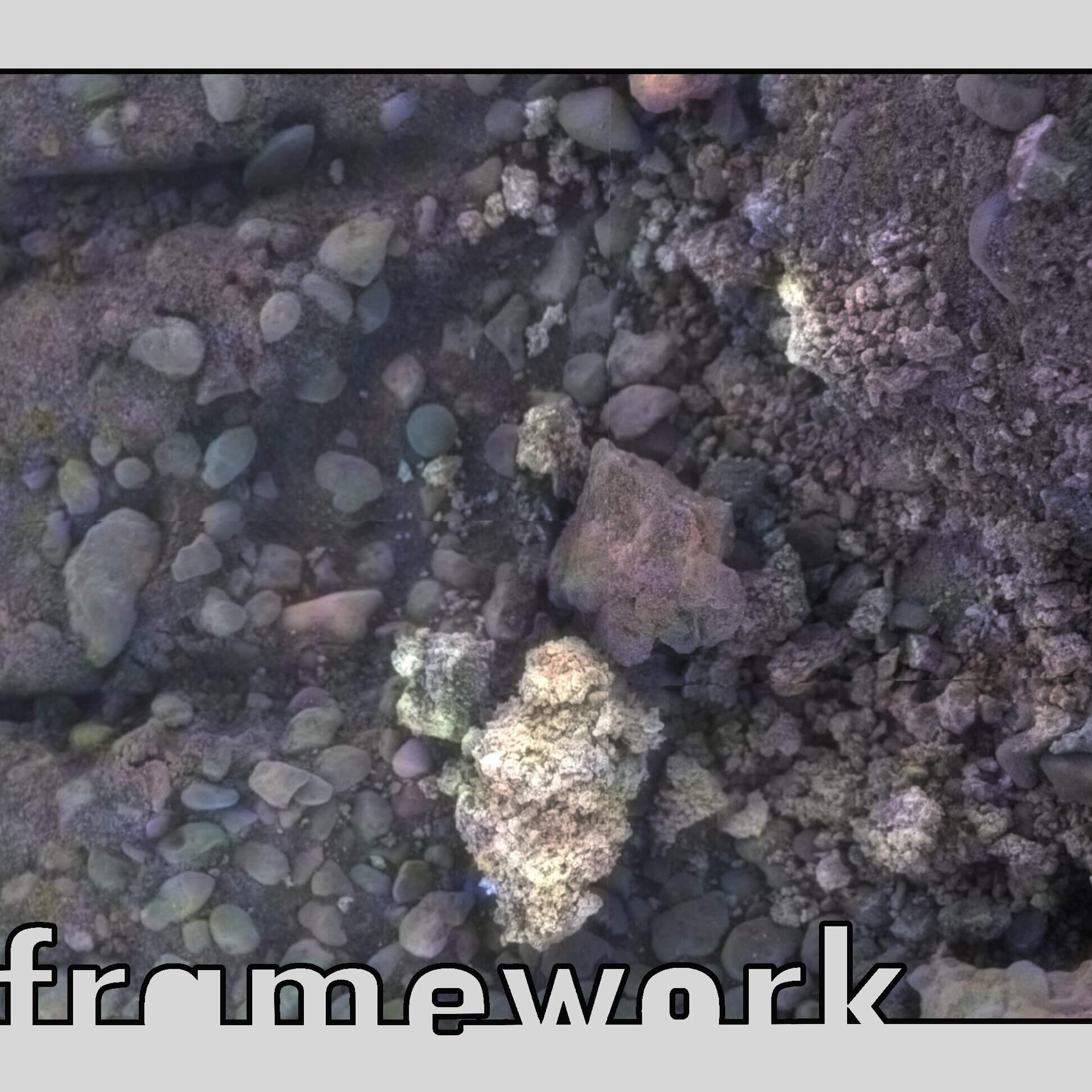
Across the globe, soundscapes are systematically stolen by a ruthless cabal, while daring liberators find and return them!
The cabal alleges that soundscapes subvert their sacred scripts. Liberators claim soundscapes are essential to understanding different peoples and places. Here are three rescued soundscapes, woven into a narrative tapestry. You listen, and decide.
Field recordings from Dubai, UAE, Vancouver, Washington, and Victoria, Canada, all by John Barber,
combine as a sonic narrative
tapestry representative of fluid time and
place but solidly grounded in rich listening experiences. Despite substituting mechanical and
environmental sounds for human dialogue, this
work offers sonic simularity and serendipity. And promotes a sense of narrative completeness.
Originally released as Framework Radio #808, July 4, 2022. Learn more at the Framework website→
Background
A cache of stolen soundscapes was discovered in 2022, hidden in a basalt cave behind Yellowstone's Undine Falls. Carved by the waters of Lava Creek for millennia, the grotto harbored hundreds of captive soundscapes—acoustic snapshots of natural, environmental, and human activity at a specific place and time. Each soundscape was imprisoned in an empty Chambord whiskey bottle and defiantly sealed with a corn cob plug, according to officials.
The shadowy Secret Society for Sonic Sobriety claimed responsibility for the auditory heist. Their radical manifesto—to cleanse the globe of unwanted soundscapes—will continue, they say, as they ruthlessly purge any soundscape that fails to uphold their cult-like sacred scripts. Brave sonic soldiers, they vowed, would continue these audacious operations.
But the cabal met its match. These bottled sounds were daringly liberated by Captain Craig McKenzie and the intrepid crew of the legendary submarine Omega.
Turning the rescued audio over to Yellowstone authorities, McKenzie declared: "We are far afield from our headquarters in Latitude Zero, but we will travel to the ends of the Earth to return stolen soundscapes. A world without soundscapes is a world of diminished imagination!"
McKenzie and his crew are battle-hardened soundscape hunters. They have excavated audio buried in abandoned subway tunnels, intercepted it within civic monuments, and tracked it through underground lava tubes and decaying attics. Still other recordings were unearthed from steel boxes buried beneath isolated fields and pastures.
"These soundscapes are the living tissue of human connection," McKenzie warns. "Hearing the distinct sounds of different cultures and places is to understand them—and it is that very understanding that unites humanity! These recordings expose the unbreakable bond between a people and the land they inhabit. The Society wants to break that bond. They want isolation and rigid control. We fight for empathy and global connection. We will prevail."
Among the soundscapes returned were three recorded by John Barber. One in Dubai, UAE. Another, recorded in Vancouver, Washington. And a third, recorded in Victoria, British Columbia, Canada. Using the Re-Imagined Radio sound studios, situated in the misty Pacific Northwest, Barber wove these soundscapes into a single, spellbinding sonic tapestry where the narrative is based on mechanical and environmental sounds, rather than human dialogue.
Production
Contents
This episode features field recordings made in Dubai, UAE, Vancouver, Washington, and Victoria, Canada, by John Barber.
Statement
At the heart of every soundscape is the idea of sounds that might be heard at a particular place and time. This gives the field recordist and/or sound artist large latitude. Including creating collages of sounds heard in different places at different times.
Sounds recorded at one location, at one time, may connect, through either sonic similarity or serendipity, with sounds recorded at another location, at a different time. The results are soundscapes representative of fluid time and place but solidly grounded in rich listening experiences.
The field recordist may record sounds heard at a particular place, at multiple times. This helps produce compositions interpreting, describing, and documenting a place, in time, over time. And promote the sense of realism conveyed by the soundscape.
This realism evolves from the process of making and considering what is captured by the the field recordist's microphone. In my practice, composing a soundscape is often a process of selecting, editing, and juxtaposing elements of different recordings made a different times to create a sense of a place, to promote a believable experience of being in that space. This sense of structure and reality comes from active aural engagement for both myself and those listening to my works.
This work, "Dawn Birds, Light Traffic, Melodic Machines," seeks to promote a representative soundscape. A constructed scenario that connects realistic sounds in new and exploratory ways. That asks listeners to pay attention to aural details of different, often divergent, acoustic environments. And find in their overlap and interplay connecting dialogue.
Soundscapes then not only provide ways of understanding places through their sounds, but prompt listeners to explore new ways of understanding those places through listening. Specifically, "Dawn Birds, Light Traffic, Melodic Machines" offers two opportunities for listeners.
First, it foregrounds the aural world. This pushes one to listen to and contemplate the sounds that might be heard.
Second, soundscapes can help listeners engage with unique features and affordances of the sonic environment. To cultivate ways of hearing dialogs between the sonic elements of that environment. Stories told with sounds other than human voice.
Significance
With this work, I experiment specifically with the question, "Might 'Speech' be considered, and heard, in sounds other than the human voice."
"Dawn Birds, Light Traffic, Melodic Machines" is that experiment. Constructed from three distinctly different soundscapes. Each recorded at different times and places. This works seeks to move as far away from human dialogue as possible by privileging environmental and mechanical sound sources as its composition sources.
Despite this separation, this work offers sonic simularity and serendipity sufficient to promote a sense of narrative completeness.
Producer's Notes
Richard Hand and Mary Traynor propose speech, sound, music, and silence as the "constituent parts" of radio drama (Hand, Richard J. and Mary Traynor. Radio Drama Handbook: Audio Drama in Context and Practice. Continuum International Publishing Group. 2011, 40).
Traditionally, speech is weighted more heavily, as this is the primary form of human communication. But other sounds, music, even silence are part of the mix, especially when we consider that radio depends of all these types of sound being delivered to and heard by listeners in order to convey its message of listening from afar. So, might other sounds—environmental, natural, mechanical— be considered as speech, specifically dialogue, for radio storytelling?
"Dawn Birds, Light Traffic, Melodic Machines" is an answer. Thank you for listening.
— John F. Barber
Promotion
Press
Graphics

Looking for other graphics to promote this episode?